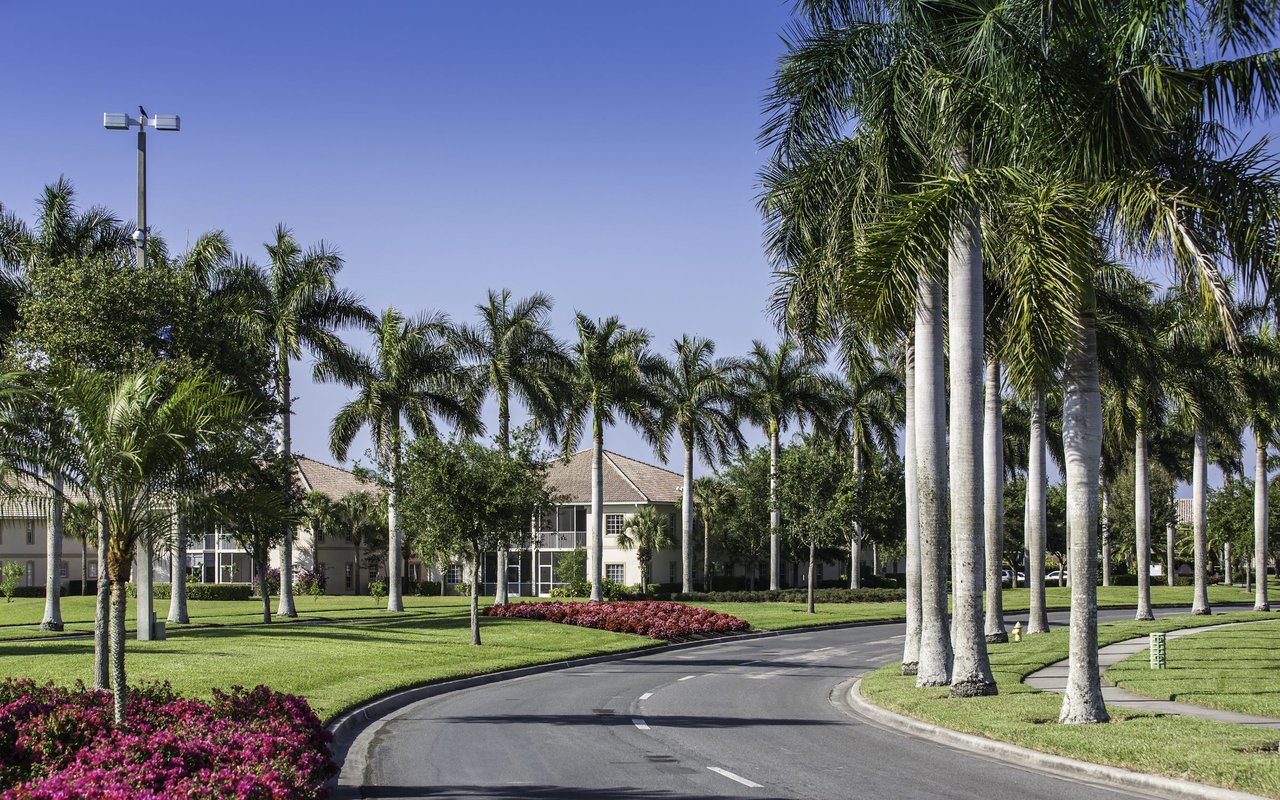
The Isles of Collier Preserve Just Lost Its Price Anchor. Here's What That Actually Changes.
July 16, 2026
July 16, 2026
For about a decade, every resale offer inside The Isles of Collier Preserve was written against an invisible second listing: whatever Minto Communities happened to be selling that week at the Discovery Sales Center. That reference disappeared on March 3, 2026, when Minto announced the community's last new home had gone under contract.
Most of the coverage treated it as a milestone. It's closer to a mechanical change in how the market prices itself.
Minto opened sales in 2013, added a 103-acre final phase in 2022, and finished at 1,825 homes across roughly 2,400 acres bordered by Rookery Bay National Estuarine Research Reserve, Naples Botanical Garden, and Dollar Bay. That footprint is now fixed. There is no more Buttonwood villa to be spec-built on a homesite you haven't seen, no more Coastal Cottage to price against a resale two streets over, and no more model tour that ends with a printed base price plus options sheet.
That matters because for most of the community's history, a buyer touring a resale on Nevis Way or Santo Domingo Drive had a second data point built into the day: walk into the Isles Club, drive to the Discovery Sales Center, and see what Minto was charging for something comparable at that morning's release price. The resale market didn't set itself. It set itself in relation to the builder.
A production builder inside a gated community serves a function most buyers never think about. It publishes a price. That price becomes the ceiling for anything on the resale side that isn't demonstrably better, and the floor for anything that is. Sellers of a five-year-old Palmetto with an upgraded pool couldn't ask more than a new Palmetto without a real story. Sellers of a Banyan with sunset water views on the Cypress Waterway could — but only by however much the market believed water views were worth versus a fresh interior.
Minto's price sheet was the resale market's coordinate grid.
Once the builder exits, that grid gets erased. Every resale seller is now setting the number in reference to other resales, and every other resale is doing the same thing. That is a slower, noisier process. It is also the mechanism behind the two numbers most buyers glance at without reconciling.
Trailing-year MLS activity through June 2026 shows 116 homes changed hands with an average sale price of $1,452,509 against an average asking price of $1,541,236. That works out to a 94% list-to-sell ratio and a price per square foot of roughly $432. Over the same period, homes took an average of 154 days to sell.
A 94% ratio reads like a disciplined market. A 154-day marketing period reads like a slow one. Both are true, and they describe the same phenomenon from different sides.
Homes that were priced to the trailing comparable set closed near ask. Homes priced to what the seller remembered from 2022, or to what a Minto model was fetching in 2024, sat until they were re-priced. The average absorbs both.
Active inventory bears that out. Depending on the reporting date, between roughly 73 and 89 homes have been listed in the community this summer, ranging from about $525,000 for the smallest condo product up to $4.395 million for the estate at 8859 Nevis Way. Median list prices have hovered around $1.12M to $1.2M. Buyers now scanning that spread are doing something they couldn't do while Minto was open: comparing resales only against other resales, without a builder benchmark to anchor the top of the range.
The community was designed as a ladder, and the ladder still exists. It just no longer has published rungs.
Once you strip out the builder, resale pricing across these tiers has to be reconstructed from actual closings. Which is why the trailing-year $432 per square foot number is more useful than any single active list price. It's the number that survived the negotiation.
Appraisals get harder before they get easier. Appraisers lean on the most recent comparable sales, and for most of 2024 and 2025 those comparables included homes that closed while Minto was still absorbing demand at the top of the funnel. As new-construction contracts finish closing through 2026, appraisers will lean more heavily on resale-to-resale pairs, and the mix will shift. A buyer writing an offer in the second half of 2026 on a Mangrove with lake views should expect a wider spread between what a seller believes the home is worth and what an appraisal supports, particularly on homes that were previously benchmarked against a Minto asking price that no longer exists.
The "new construction premium" is now sunk cost, not resale value. Buyers who paid Minto for post-contract structural options, extended lanais, or upgraded finish packages priced those upgrades against the builder's option list. On resale, those same upgrades get valued by whatever the next buyer will pay for them, not what the previous owner paid to add them. The 8859 Nevis Way listing openly discloses more than $600,000 in builder upgrades. Whether the market pays for that number, part of it, or a discount against it is now a resale question, not a builder question.
The reflex in most communities that finish out is to lean on the sold-out headline as a marketing point. It is a real point. Inventory in The Isles is finite, no CDD assessments are attached to homes, and the amenity footprint at the Isles Club, Overlook Bar & Grill, and Canine Cove dog park is complete rather than promised.
The mistake is treating "sold out" as a permission slip to price above the trailing comp set. Buyers still have access to the same MLS histories agents do, and the July 2026 active list already includes homes that have absorbed one or more price reductions on the way to a realistic number. Pricing the first listing at trailing-comp-plus-10% and reducing twice takes six months, matches the community's 154-day DOM average, and typically closes below where a disciplined initial price would have closed. Pricing to the trailing comp set and holding is the shorter path to the same net.
For sellers with genuine premium features — direct Cypress Waterway frontage, Nevis Way enclave positioning with the private Bayshore gate, or fully executed custom Stock builds — the argument for a premium is stronger than it was while Minto was open. There is now no builder alternative for a buyer who wants a specific type of home inside these gates. But that premium has to be defended with the comparable set, not asserted against a memory of 2022 pricing.
Are HOA fees changing now that the community is built out?
Recurring HOA fees at The Isles have been reported in roughly the $300 to $450 per month range depending on product type, with the fee covering landscape and irrigation maintenance. Buildout typically stabilizes the base assessment because master amenity spend transitions from developer subsidy to full owner responsibility, and reserves are set against the full 1,825-home base rather than a partial one. Buyers reviewing estoppel and budget documents in 2026 and 2027 should read the reserve study more carefully than they would have in 2019, when the community was still growing into its amenity fixed costs.
Does the sold-out status affect the Hamilton Harbor Yacht Club membership option?
Membership at Hamilton Harbor Yacht Club is separate from the community HOA, offered as an option for residents rather than an included amenity. Access questions and current initiation terms belong with the club directly, not with the resale contract.
Is there still new construction available inside the gates?
Not from Minto. Custom builds by Stock Development and other builders on remaining private lots or as scrape-and-rebuild projects are possible on a case-by-case basis, and those become the closest thing to a new-construction option going forward. That is a different transaction from buying a spec home off a builder's price sheet, and it belongs in a different budget category.
What about the Discovery Sales Center itself?
Minto's original development plan called for turning the sales center over to residents as additional amenity space upon buildout. That transition is a community-governance question rather than a real estate one, and buyers touring homes in the second half of 2026 should ask their agent for the current status rather than assume the space is still functioning as a sales office.
If you are weighing a purchase or a listing inside The Isles of Collier Preserve while the market absorbs Minto's exit, the difference between a good number and a bad number is now entirely a resale-comp conversation. That is the part worth getting right. Free State Florida Homes works this market house by house, and Let's Connect if you'd like to walk through what your specific address, floor plan, and lot position mean in the current comparable set.
Stay up to date on the latest real estate trends.
Many housing experts believe tax reform that encourages selling would unlock more inventory.
One important note before we dive in: real estate market data runs approximately one month behind.
The consequences were predictable: inflation ripped to the highest levels in modern American history.
Property tax relief that could free FL homeowners from one of their largest recurring expenses.
With eight years of full-time residential real estate experience in the Naples, Bonita Springs, and Estero markets, Tim has developed an intimate understanding of what drives housing decisions in one of America's fastest-growing regions.