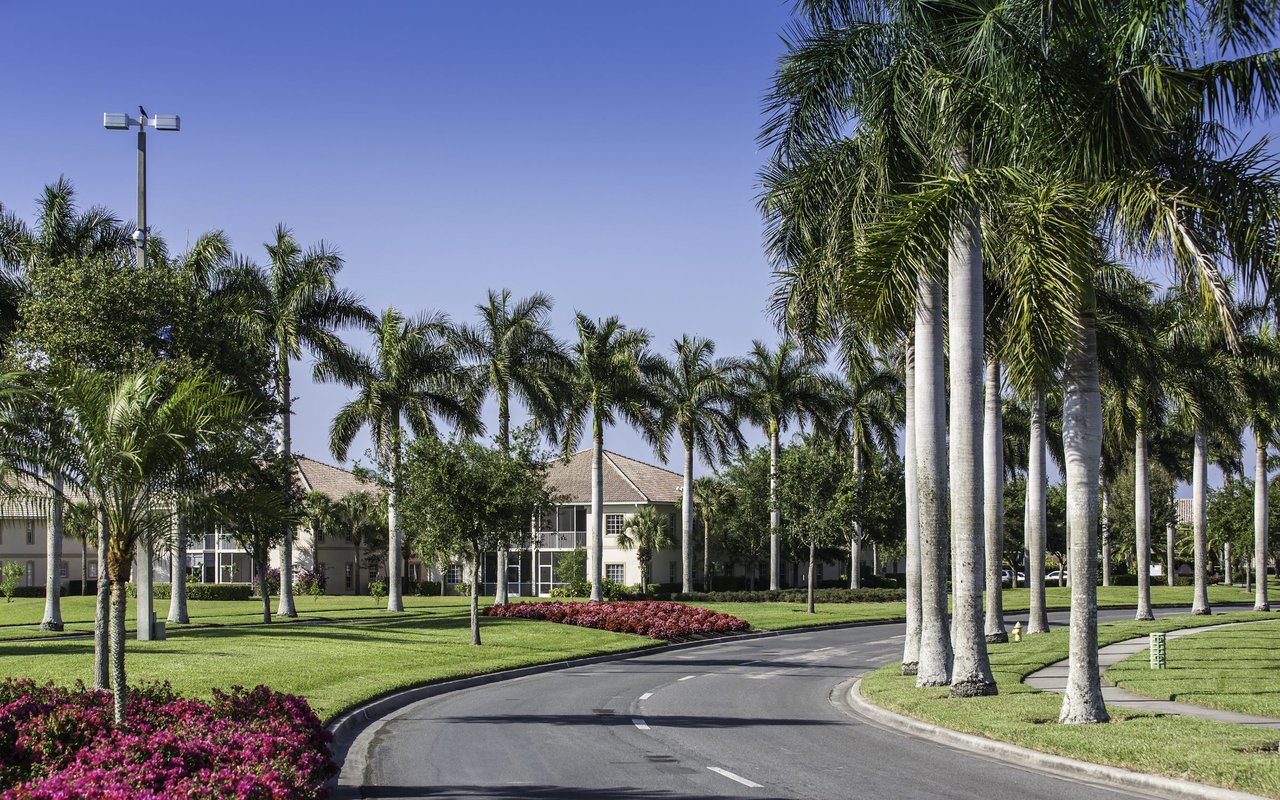
Selling in Isles of Collier Preserve in 2026: The Paper File Is the Product
August 6, 2026
August 6, 2026
A Naples title company called a seller in late June to reschedule a closing. The buyer, an out-of-state family office, had formed a Delaware LLC to take title. The settlement agent needed forty-eight extra hours to sort out whether the March 1, 2026 FinCEN reporting rule still applied after a Texas court vacated it eighteen days later. The house was fine. The disclosures were fine. The seller had never heard of the rule.
That is the shape of an Isles of Collier Preserve closing in 2026. The friction has moved off the property and onto the file. Buyers coming into ICP this year are reading the seller's disclosure package, the elevation certificate, the HOA transfer schedule, and the title company's FinCEN intake questionnaire before they book a second showing. The listing photos are a formality. The paperwork is the product.
For a decade, ICP resale sellers had an invisible price floor: the Minto Communities model center a few miles down Bayshore. When a buyer weighed a resale Acacia against a brand-new one, the builder's sticker set the ceiling and the resale set itself just under it. That structure is gone. Minto's remaining inventory sold through in early 2026, and active listings now describe the community as fully built out, with a handful of never-occupied floor plans marketed as the last of their kind rather than the first of a phase.
The resale market has to price itself now, and the data show sellers still calibrating. Depending on which cut you look at, the community reads very differently:
| Snapshot | Median or average | Days on market | Source window |
|---|---|---|---|
| List-to-sell ratio and volume | 94% ratio on 96 sales, $455/sqft | 163 avg. DOM | Trailing twelve months, Feb 2026 |
| Active listings | $1.125M median list, $652/sqft | 89 avg. DOM | April 2026 |
| Closed sales | $1.6M median sold | n/a | Feb 2026, Redfin East Naples cut |
These three numbers do not disagree. They tell the same story from three angles: a wide product range, a slow absorption pace, and buyers who are willing to pay real money but only for homes that arrive priced and documented like the market is actually a resale market now.
Florida's flood disclosure statute is the single biggest change in how an ICP home gets sold this year, and most owners still think it is the form they signed at their original Minto closing.
House Bill 1049, codified at Florida Statute § 689.302, took effect October 1, 2024. It required sellers to disclose past flood insurance claims and any federal flood assistance received on the property, delivered on the standard form at or before contract execution. Straightforward.
Then Senate Bill 948, codified as Chapter 2025-166, expanded the framework effective October 1, 2025. The version an ICP seller signs today asks about any flooding that damaged the property during the seller's ownership, not just the events that produced an insurance claim. Water that came in through a lanai slider during a 2022 storm and got mopped up before the tile dried is now a disclosure item.
The statute defines flooding broadly enough to catch surface water accumulation and sustained standing water from rain, not only tidal overflow. Failure to disclose exposes the seller to monetary damages, rescission of the contract, or punitive damages, and the liability extends to the seller's agent if the agent knew of the risk. Contracts written on the 2026 FAR/BAR forms attach or reference the FD-1 flood disclosure directly, and a purchase agreement that leaves it out can be voidable.
Practical translation for an ICP seller: pull your storm history before you list. Note the year, the source of water, the rooms affected, and whether any claim or repair receipt exists. If nothing ever happened, say so on the form and keep the record. Buyers coming in from Ohio or New Jersey are reading these forms carefully, and their agents are trained to walk away from vague answers.
Naples is one of the highest-cash residential markets in Florida, and ICP sits inside that pattern. When a Manhattan trust or a Boston-based LLC buys a coach home in Sabbia Circle, the title company at the closing table is now required to think about the FinCEN Residential Real Estate Reporting Rule.
Here is the state of play. The rule became effective March 1, 2026, requiring title agents, settlement agents, or closing attorneys to file a Real Estate Report for non-financed transfers of residential property to legal entities and trusts. On March 19, 2026, the U.S. District Court for the Eastern District of Texas vacated the rule on the ground that FinCEN exceeded its Bank Secrecy Act authority. FinCEN, joined by the Department of Justice, has appealed. FinCEN's own guidance now reads that reporting persons are not required to file while the order is in force.
What this means for a seller in ICP is not that the rule vanished. It means the closing timeline for a buyer using an LLC or trust structure is being managed by title companies that are running dual-track compliance. Some are still collecting beneficial ownership information at intake in case the appellate court reinstates the rule. Others are asking sellers for a longer disclosure period on the buyer's structure. A seller who signs a contract with a thirty-day close and a trust buyer may find the title company asking for an extension. Building fifteen extra days into a contract from the start is cheaper than negotiating them under time pressure.
The City of Naples and Collier County adopted new Flood Insurance Rate Maps that took effect in 2024, replacing the 2012 panels. The eastern and southern edges of the city, which include the Bayshore corridor, moved on those maps. Some parcels that were Zone X in the last decade are Zone AE today, and a small number moved the other direction.
For ICP sellers, three artifacts now travel with the home the way a survey once did:
Collier County still carries roughly 118,000 active NFIP policies as of March 2026, so buyers arrive assuming flood insurance is part of the deal. The seller who has already done the math looks organized. The one who hasn't looks like a negotiation.
Read the current ICP listing descriptions and you will see something that did not appear five years ago: sellers explicitly offering to pay the community capital contribution at closing. One active resale listing this summer notes the owner will cover the $9,500 capital contribution as part of the deal. That is not decoration. It is a line item buyers are now negotiating against, the same way they negotiate roof credits.
If you list in ICP without a plan for how the capital contribution, HOA transfer fees, and prorated club dues will be handled, the buyer's agent will fill in the plan for you. Naming the number in the listing description is the low-stakes version of the conversation. Fighting it in the counteroffer is the expensive one.
Before the sign goes in the ground, an ICP seller in 2026 should have all of this in one folder:
None of that is glamorous. All of it shortens the contract-to-close window and closes the disclosure gaps that turn into post-closing lawsuits.
Do I need to disclose water intrusion that happened before I owned the home? The statute reaches your period of ownership. If a prior owner disclosed a flood event to you at your purchase, keep that paper. Your agent will help you decide what to attach.
Is the FinCEN reporting rule dead? Vacated and on appeal. Treat it as suspended, not repealed. Title companies in Naples are still asking entity buyers for beneficial ownership information as a precaution, and that can add days to a closing.
Does an "as-is" contract remove my disclosure obligations? No. Under Florida case law going back to Johnson v. Davis, sellers must disclose material facts affecting property value that a buyer cannot readily observe. An as-is clause governs repairs, not disclosure.
Should I get an elevation certificate even if my home is not in a mandatory flood zone? Often yes. Under Risk Rating 2.0, elevation drives premium more than zone label. A favorable certificate can save a buyer several hundred dollars a year, which sharpens your listing against competing floor plans.
Selling a home in Isles of Collier Preserve this year rewards owners who treat the file as seriously as the finish work. If you are thinking about listing between now and season, Free State Florida Homes can walk your specific property through the disclosure, insurance, and HOA-transfer checklist before the first showing. Let's Connect.
Stay up to date on the latest real estate trends.


With eight years of full-time residential real estate experience in the Naples, Bonita Springs, and Estero markets, Tim has developed an intimate understanding of what drives housing decisions in one of America's fastest-growing regions.